What Are the Top Aluminum Entry Door Types?

Time:2026-09-30 Author:Madeline
0%

Choosing an Aluminum Entry Door is not simply a matter of color, price, or modern appearance. Entry doors influence security, daylight, weather resistance, and the first impression of a property. Grand View Research’s industry analysis indicates that the global aluminum doors market is expanding steadily, supported by urban construction and demand for durable, low-maintenance products. That growth matters, but market size alone cannot identify the right door type.

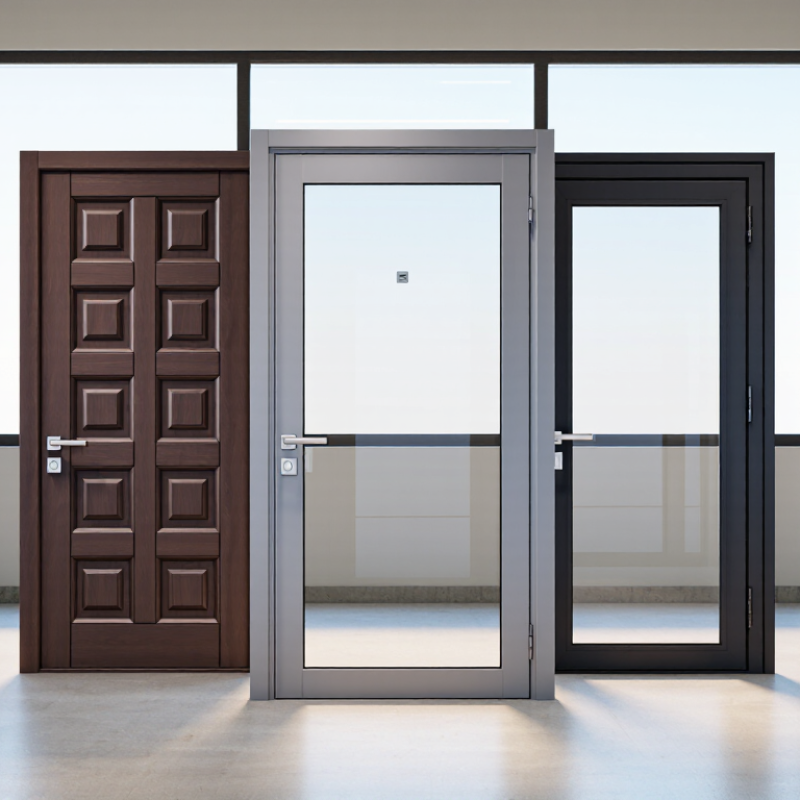
A practical comparison should examine flush doors, panel doors, glazed doors, doors with sidelights, and thermally broken systems. Each design behaves differently. A full-glass entry door can brighten a narrow hallway. A solid panel door may provide stronger privacy and a heavier visual presence. Thermally broken frames can reduce heat transfer through aluminum, especially when paired with insulated glass and properly sealed thresholds. Small details matter.

ENERGY STAR guidance emphasizes whole-unit performance, while NFRC labeling helps buyers compare U-factor, solar heat gain, and visible transmittance. FGIA standards also provide useful benchmarks for air leakage, water resistance, and structural performance. These reports and standards support a more professional buying decision, although they do not replace site-specific inspection. A coastal entrance, for example, may need finishes tested for salt exposure. A shaded northern doorway may prioritize insulation instead of solar control.

The best choice depends on climate, exposure, security expectations, and architectural style. That sounds obvious. It is often overlooked. This guide examines the top Aluminum Entry Door types and explains where each design performs well, where it may disappoint, and which specifications deserve closer attention.
What Are the Top Aluminum Entry Door Types?

Classify Aluminum Entry Doors: Hinged, Pivot, Sliding, and Folding Types

Aluminum entry doors come in four main types: hinged, pivot, sliding, and folding. Each design changes how people enter, move, and use nearby space. Hinged doors remain the familiar choice. Their side hinges create a predictable swing and strong weather seal. They suit compact entrances when the opening path stays clear. A multi-point lock and adjustable hinges can reduce drafts and alignment problems. Field checks often reveal a simple issue: the threshold was never leveled.

Pivot doors rotate from concealed points above and below the panel. They can handle wide, heavy leaves while creating a dramatic, balanced opening. However, the swing may occupy more floor area than expected. Measure furniture paths before selecting this design. Sliding doors travel along a track instead of swinging inward. They work well beside patios, narrow corridors, and entry zones with limited clearance. Their performance depends on clean tracks, accurate rollers, and drainage that does not trap grit. Small debris matters.

Folding doors use connected panels that stack to one or both sides. They can open a broad entrance and connect indoor areas with a courtyard or porch. Yet more panels mean more hinges, seals, and adjustment points. That complexity deserves careful installation and periodic inspection. In practice, the best type depends on wind exposure, traffic, security needs, accessibility, and available clearance. I would not choose from appearance alone. A beautiful door can still feel awkward if its handle, threshold, or swing conflicts with daily routines. Confirm panel weight, thermal breaks, glass specification, and local building requirements with a qualified installer.

Compare Thermal-Break Frames Using NFRC U-Factor and SHGC Ratings

Aluminum entry doors suit modern homes, apartments, and commercial entrances. Common types include hinged, pivot, sliding, and narrow-stile doors. Among them, thermally broken frames offer a practical advantage. A thermal break separates interior and exterior aluminum with an insulating barrier. This reduces heat transfer through the frame. It can also limit interior condensation during cold weather.

When comparing products, check the NFRC U-factor. This rating measures heat flow through the complete door assembly, including the frame and glazing. A lower U-factor generally indicates better insulation. Do not judge the frame alone. Glass area, seals, thresholds, and installation can change real performance. The NFRC SHGC rating measures how much solar heat enters through the door. A lower SHGC may help in hot, sunny climates. A higher rating can provide useful passive warmth in colder regions. The best value depends on orientation and local weather.

Tips: Ask for the full NFRC label, not a partial specification sheet. Compare doors with similar glass areas and operating styles. Inspect the thermal break visually, if possible. It should form a continuous barrier around the frame. Check weatherstripping compression with a simple paper test. If the paper slides out easily, sealing may be weak. I would also question unusually impressive numbers. Ratings are useful, but installation errors can undermine them quickly. A carefully installed, moderate-performing door may outperform a poorly fitted premium unit.

What Are the Top Aluminum Entry Door Types? — Compare Thermal-Break Frames Using NFRC U-Factor and SHGC Ratings

Aluminum Entry Door Type Frame Construction Door Panel Construction Typical Glazing Configuration Typical NFRC U-Factor Range* Typical NFRC SHGC Range* Relative Thermal Performance Recommended Applications
Standard Non-Thermally Broken Aluminum Door Aluminum frame with a continuous metal path between the interior and exterior surfaces. Aluminum-faced panel with limited or no insulating core. Single glazing or basic clear insulated glazing. 0.65–0.90 Btu/h·ft²·°F 0.45–0.70 Basic Interior vestibules, mild climates, utility entrances, and locations where initial cost is the primary concern.
Thermally Broken Aluminum Entry Door Aluminum frame separated by a low-conductivity polyamide or equivalent thermal barrier. Insulated aluminum panel or framed panel with perimeter thermal breaks. Double insulating glass, commonly with low-emissivity coating and argon fill. 0.35–0.55 Btu/h·ft²·°F 0.25–0.55 Moderate to good Conditioned residential and light-commercial entrances in mixed or heating-dominated climates.
Thermally Broken Door with Insulated Opaque Panel Thermally broken aluminum frame with insulated sill and improved weather seals. Multi-layer panel with a low-conductivity insulating core and aluminum skins. Limited glazing area or a small insulated glass vision panel. 0.25–0.40 Btu/h·ft²·°F 0.20–0.45 Good to high Energy-conscious homes, cold climates, side entrances, and entrances where reduced heat loss is important.
Full-View Thermally Broken Aluminum Door Thermally broken aluminum perimeter frame with insulated threshold and compression seals. Mostly glazed sash or narrow aluminum stiles and rails. Low-E double glazing; performance depends strongly on glass spacer, coating, and gas fill. 0.30–0.50 Btu/h·ft²·°F 0.25–0.60 Moderate to good Contemporary entrances, daylight-focused designs, offices, retail storefronts, and covered entry areas.
High-Performance Thermally Broken Aluminum Door Deep thermal break, insulated threshold, multi-point sealing, and carefully isolated hardware zones. Highly insulated panel or optimized glazed sash with reduced conductive paths. High-performance low-E double glazing or triple glazing, depending on climate and design. 0.20–0.35 Btu/h·ft²·°F 0.20–0.45 High Cold climates, high-performance buildings, passive-design projects, and entrances requiring improved comfort near the door.
Aluminum Door with Solar-Control Glazing Thermally broken aluminum frame, typically paired with insulated glazing and improved perimeter seals. Insulated panel, glazed panel, or a combination of both. Low-E solar-control glass selected to reduce unwanted solar heat gain. 0.30–0.50 Btu/h·ft²·°F 0.18–0.35 Good for cooling loads Hot climates, west- or south-facing entrances, sun-exposed façades, and buildings with significant air-conditioning demand.
How to read the ratings: A lower U-factor generally indicates better resistance to heat flow. SHGC is dimensionless; a lower value admits less solar heat, while a higher value admits more solar heat. Actual NFRC values are assigned to a specific tested door, frame, glazing, hardware, and size combination—not to an aluminum door type in general.
*The ranges shown are representative planning ranges for comparable aluminum entry-door assemblies. Verify the exact NFRC-certified U-factor and SHGC on the product’s NFRC label or rating certificate before specifying or purchasing.

Assess Glazed and Solid Panels by VT, Air Leakage, and Water Resistance

What Are the Top Aluminum Entry Door Types?

Glazed and solid aluminum entry doors perform differently under measurable conditions. Visible transmittance, or VT, describes how much daylight passes through glazing. NFRC 200 measures VT on a 0–1 scale, while NFRC 100 supports consistent fenestration ratings. Clear insulated glass can approach a VT near 0.70, but coatings, tints, and frames reduce it. Solid panels have virtually zero VT. That means privacy, not daylight.

Air leakage matters at the threshold and weather seals. ASTM E283 measures leakage under pressure, commonly reported in cubic feet per minute per square foot. NAFS classifications often set maximum residential leakage near 0.30 cfm/ft² at 1.57 psf, although the tested product and class control the result. A glazed door may leak more if its glass stops, corners, or adjustable sweep are poorly installed. Small gaps are not theoretical; wind can make them audible.

Water resistance requires equal caution. ASTM E331 tests water penetration using controlled spray and pressure, while NAFS assigns performance requirements by product class. A door that passes a laboratory test can still fail after incorrect sill pan installation. The U.S. Department of Energy’s building-envelope guidance repeatedly identifies flashing, drainage, and continuity as critical field details. Solid panels remove glazing joints, but they do not remove risk. I have seen water collect where the sill meets uneven masonry. The panel was not the real problem. Local exposure, overhang depth, seal compression, and installation quality should be reviewed with the certified test report, not guessed from appearance.

Evaluate Security with ANSI/BHMA Grade 1–3 Hardware Standards

Aluminum entry doors may be hinged, sliding, folding, or thermally improved. Each type needs hardware matched to its movement and exposure. A hinged door often supports a mortise lock, deadbolt, closer, and reinforced strike. Sliding doors require secure interlocks, anti-lift devices, and properly adjusted locks. The door style matters, but hardware quality often decides daily security.

ANSI/BHMA grades provide a useful performance reference. Grade 1 hardware offers the highest commercial durability and is suitable for demanding entrances. Grade 2 provides dependable performance for many homes and light commercial spaces. Grade 3 generally meets basic residential needs. These grades relate to tested hardware performance, not the complete door assembly. A Grade 1 lock cannot correct a weak frame.

Check the strike plate, fasteners, hinges, and surrounding aluminum. Short screws may hold poorly in thin material. Longer, properly anchored fasteners can improve resistance, when the frame allows them. Inspect the latch engagement with the door closed. It should move smoothly, without excessive play. Glass panels also deserve attention, especially near the lock. Hardware grade is important, but installation quality remains easy to overlook. That is the imperfect part: a certified product can still perform poorly when alignment, anchoring, or maintenance is neglected. Choose the grade after considering traffic, occupancy, weather, and the consequences of forced entry.

Select Door Types by ASTM E330 Loads, Opening Size, and Maintenance Needs

What Are the Top Aluminum Entry Door Types?

Aluminum entry doors usually fall into hinged, sliding, and folding designs. Each type responds differently to wind pressure and daily use. ASTM E330 testing helps assess structural performance under uniform static air pressure. It does not replace project-specific engineering. Confirm the required design pressure with the architect or structural consultant.

Hinged doors suit many commercial and residential entrances. They provide a firm compression seal and handle frequent operation well. For wide openings, paired leaves can improve access without requiring a deep wall pocket. Sliding doors preserve floor space, but their rollers, tracks, and weather seals need regular cleaning. Large glass panels also increase weight and may demand stronger frames. Bigger is not always better.

Folding systems can cover very wide openings and create a strong indoor-outdoor connection. However, their hardware count increases maintenance points. Select the door type by opening width, traffic level, exposure, and ASTM E330 load requirements. Coastal sites may need durable finishes and corrosion-resistant fasteners. Busy entrances benefit from replaceable rollers, adjustable hinges, and accessible drainage paths. Ask for tested assembly data, not only a material thickness. Field conditions can differ from laboratory results. A neglected track can undermine an otherwise well-designed door. Inspect seals, fasteners, hinges, and drainage at scheduled intervals. Keep records. They reveal recurring problems before failure becomes expensive.

FAQS

What are the main types of aluminum entry doors?

The four common types are hinged, pivot, sliding, and folding. Each one changes movement and space use.

When is a hinged aluminum door a practical choice?

Hinged doors suit entrances with a clear swing path. Side hinges create predictable movement and support a strong weather seal.A multi-point lock can improve security. Adjustable hinges may reduce drafts and alignment issues.

What should I check before choosing a pivot door?

Measure the full swing area, including furniture paths and nearby walls. Pivot doors can support wide, heavy panels.They look impressive.However, their swing may use more floor space than expected. The appearance alone is not enough.

Where do sliding aluminum doors work best?

Sliding doors suit patios, narrow corridors, and entrances with limited clearance. They move along tracks instead of swinging.Keep the tracks clean. Small grit can affect rollers, drainage, and locking.

What are the advantages and drawbacks of folding doors?

Folding doors can create a broad opening between indoor areas and a porch or courtyard.More panels mean more hinges, seals, and adjustment points. That complexity requires careful installation and regular inspection.

How does a thermal break improve an aluminum door?

A thermal break separates interior and exterior aluminum with an insulating barrier. It reduces heat transfer through the frame.It may also reduce indoor condensation during cold weather. The barrier should remain continuous around the frame.

What do U-factor and SHGC ratings tell me?

A lower U-factor generally means better insulation across the complete door assembly. This includes glazing, frame, and seals.SHGC measures solar heat entering through the door. Lower values may suit hot, sunny areas.Higher values can help provide warmth in colder climates. Check the complete rating label.

How can I test an entry door’s weather sealing?

Close the door over a sheet of paper. If the paper slides out easily, compression may be weak.Inspect the threshold, weatherstripping, and frame alignment. A level threshold matters.It is often missed.

What hardware grade should an aluminum entry door use?

Grade 1 hardware offers the highest tested durability. Grade 2 suits many homes and light commercial entrances.Grade 3 generally supports basic residential use. Choose according to traffic, occupancy, weather, and security consequences.A strong lock cannot fix a weak frame. Fasteners, hinges, strikes, and anchoring still matter.

Conclusion

Choosing the right Aluminum Entry Door begins with understanding how each operating style fits the building and daily use. Hinged doors offer a familiar, efficient solution, while pivot doors create a wider visual statement and can accommodate large panels. Sliding doors save space and support broad openings, whereas folding systems provide flexible transitions between interior and exterior areas. Frame performance also matters: thermal-break construction can reduce heat transfer, and NFRC U-Factor and SHGC ratings help compare insulation and solar-control qualities.

Panel selection should balance appearance, daylight, privacy, and durability. Glazed panels can be assessed through visible transmittance (VT), air-leakage performance, and water-resistance testing, while solid panels may provide greater privacy and impact resistance. Security depends on properly specified hardware, with ANSI/BHMA Grade 1–3 classifications indicating different levels of durability and protection. Finally, consider ASTM E330 structural-load performance, the opening’s size and exposure, expected maintenance, and long-term operating conditions before making a final selection.

Madeline

Madeline

Madeline is a dedicated marketing professional with a wealth of expertise in our company's core offerings. With a keen understanding of the industry, she brings a unique perspective to her role, consistently delivering high-quality content that highlights the superior aspects of our products. As......