Choosing the right Aluminium Entrance Door supplier in China requires more than comparing catalogue prices. The best suppliers combine stable aluminium profiles, accurate fabrication, reliable hardware, and responsive after-sales support. This article introduces leading manufacturers and explains how their capabilities differ. It considers factory experience, production equipment, export history, and quality-control procedures. Details matter. A strong supplier should provide profile thickness, powder-coating specifications, glass options, thermal-break information, and test reports. Buyers should also check whether these documents match the actual products shipped. A polished website is useful, but it is not proof of manufacturing strength.
The comparison also examines customization, minimum order quantities, packaging, delivery schedules, and installation guidance. Experienced suppliers usually discuss opening sizes, drainage design, locking systems, and local climate conditions before quoting. That conversation can reveal practical knowledge. Certifications may support a supplier’s credibility, yet buyers should verify their scope and validity independently. Factory videos can help, although they may show only selected areas. This is where careful judgment is necessary. No supplier is perfect, and even a reputable manufacturer may experience delays or communication gaps. We should admit that clearly. Sample approval, pre-shipment inspection, and written technical requirements can reduce avoidable risks. By reviewing these factors together, readers can identify China Aluminium Entrance Door suppliers that offer dependable value, rather than simply choosing the lowest initial price.
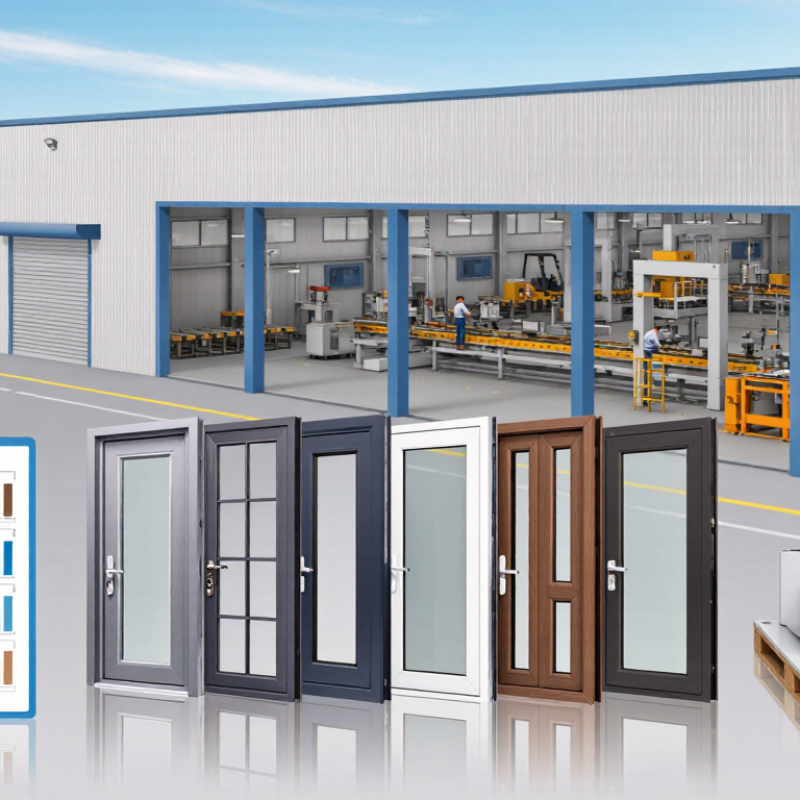
A reliable China aluminium entrance door supplier begins with clear technical control, not attractive photographs. They should explain aluminium alloy grades, profile thickness, thermal breaks, glass options, hardware, and surface treatments in plain language. During project work, experienced buyers often request a full-size sample before approving mass production. A small sample can reveal weak corners, uneven powder coating, or poor drainage design.
Factory experience matters when the supplier can provide drawings, production records, inspection points, and packing details. Ask how they test door alignment, water resistance, wind pressure, and repeated opening cycles. Reliable teams usually share measurable results instead of making vague promises. Independent certification can support their claims, but certificates should match the actual product and current production site. This detail is easy to overlook.
Communication also defines reliability. The supplier should confirm dimensions, opening direction, delivery terms, and installation responsibilities in writing. Their engineers should respond with practical solutions, especially when wall conditions change on site. After-sales support should include replacement hardware, installation guidance, and a traceable complaint process. No supplier is perfect. Even careful factories may face color variation between batches or minor packaging damage. What matters is whether they disclose risks, correct mistakes, and improve their process. A dependable partner leaves fewer surprises after the doors reach the building.
This procurement scorecard uses a 100-point evaluation model based on practical sourcing priorities: product compliance and testing, quality management, material traceability, customization capability, delivery performance, warranty support, and export documentation. Suppliers with transparent evidence in these areas are easier to verify and manage over the long term.
China is a major aluminium sourcing market. The International Aluminium Institute reported about 41.5 million tonnes of primary aluminium production in China during 2023. This scale offers broad supplier choice, but volume does not guarantee suitable doors. Buyers should compare tested assemblies, not attractive catalogue images.
Start with design details. Check frame sightlines, panel thickness, glazing size, hinge placement, threshold height, and opening direction. A slim black frame may look modern, yet it can expose weak thermal performance. Ask whether the profile uses a polyamide thermal break. Request the complete door U-value, not only the aluminium profile value. The IEA’s Buildings 2023 report states that buildings consume about 30% of global final energy, making insulation a practical concern.
Material checks should include alloy grade, wall thickness, surface treatment, and hardware corrosion resistance. Powder coating should specify its finish standard and colour tolerance. Ask for air, water, and wind-load test results under relevant EN standards. Customization should cover glass type, locks, screens, drainage, and unusual dimensions. A factory sample is useful, but one sample can hide production variation. Require batch photos, inspection records, and packaging details before shipment. I would not trust a supplier that only provides certificates without test conditions. Mistakes happen. The comparison should leave room for them.
When evaluating China aluminium entrance door suppliers, buyers should examine tested performance rather than attractive catalog images. Ask for the exact aluminium alloy, temper, profile thickness, and coating specification. A serious supplier can provide traceable material records and production inspection reports. Check air permeability, watertightness, wind resistance, thermal performance, and hardware durability for the intended climate. These details matter during heavy rain and daily use.
Certification must match the destination market. For European projects, review relevant EN 14351-1 testing and reports covering EN 12207, EN 12208, and EN 12210 performance classes. For other markets, confirm applicable national standards instead of accepting a generic certificate. ISO 9001 can indicate controlled quality procedures, but it does not prove that every door performs well. ISO/IEC 17025 accreditation is useful when checking whether an independent laboratory issued the test report. CE marking is not a universal quality badge.
Look closely at report numbers, tested door sizes, glass types, and hardware configurations. A report for a small single door may not support a larger double entrance system. Request coating thickness records, colour consistency checks, and corrosion testing suited to coastal locations. Fire-rated claims require a complete tested assembly, including frame, leaf, seals, and hardware. Suppliers sometimes present partial evidence. I have seen buyers overlook this gap. A factory audit, sample inspection, and signed tolerance sheet can reveal problems before shipment. Reliability is built through repeatable records, not promises.
When evaluating China aluminium entrance door suppliers, pricing should begin with a detailed specification, not a headline quote. Confirm aluminium grade, profile thickness, glass type, hardware, finish, packaging, and testing requirements. A low price may exclude upgraded locks, reinforced frames, or export-safe cartons. Request a sample before placing a large order. Small differences become expensive across a full container.
Lead times need careful checking. Ask for separate estimates for material preparation, fabrication, quality inspection, and port delivery. A supplier promising ten days may be counting only factory production. Written milestones create accountability. Check how the supplier handles design changes, damaged components, and inspection failures. In practice, even experienced buyers sometimes underestimate holiday closures and port congestion. Schedules can slip.
Tips: Compare total landed cost, not unit price. Confirm Incoterms, payment stages, container loading photos, packing lists, commercial invoices, and certificates required in your market. Reliable export service also includes responsive communication and clear after-sales procedures. Ask who pays for replacement parts when damage appears after opening the shipment. Do not rely on verbal promises. A shared timeline is useful. A backup plan is wiser.
| Anonymous Supplier Profile | Typical Product Positioning | Common Door Specification | Indicative FOB Price (USD/unit) |
Standard Lead Time | Sample & Prototype | Export Service Capability | Recommended Evaluation Focus |
|---|---|---|---|---|---|---|---|
| Profile A – Value-Focused Factory | Standard residential entrance doors for cost-sensitive projects | 6063 aluminium frame, powder coating, insulated glass, standard multi-point lock | $180–$320 for 1–49 units $150–$275 for 50–199 units $125–$240 for 200+ units |
25–35 days after approved drawings | 7–15 days; sample charge commonly refundable after bulk order | Commercial invoice, packing list, certificate of origin, export carton and pallet options | Confirm aluminium thickness, coating film thickness, hardware quality and packaging strength |
| Profile B – Mid-Market OEM Supplier | Custom residential and light-commercial projects | Thermal-break aluminium, double glazing, concealed drainage, configurable hardware | $320–$620 for 1–49 units $280–$540 for 50–199 units $245–$480 for 200+ units |
30–45 days, including standard colour production | 10–20 days; engineering drawings usually included for confirmed projects | FOB, CIF and DAP quotations; loading plans, inspection coordination and export documentation | Review shop-drawing accuracy, thermal-break design, water drainage and change-control procedures |
| Profile C – Premium Architectural Supplier | High-end villas, hospitality and architectural developments | Large-format aluminium profiles, laminated or low-E glass, premium hinges and access-control preparation | $620–$1,200 for 1–49 units $540–$1,050 for 50–199 units $480–$920 for 200+ units |
40–60 days after final technical approval | 15–30 days; full-size mock-up may require separate tooling and freight fees | Container optimization, moisture protection, third-party inspection support and destination-port coordination | Verify test reports, glass configuration, air/water performance, warranty terms and installation support |
| Profile D – Project-Scale Manufacturer | Large residential developments and repeated standardized orders | Modular door systems, multiple opening sizes, bulk powder coating and project-specific hardware schedules | $260–$520 for 1–49 units $220–$450 for 50–199 units $190–$390 for 200+ units |
35–55 days; phased delivery may be available | 10–18 days for a standard unit; tooling approval may add 7–14 days | Batch numbering, container loading records, staged shipments and consolidated export files | Assess production capacity, batch consistency, delivery scheduling, quality records and after-sales response time |
| Profile E – Small-Batch Custom Workshop | Unique designs, renovation projects and low-volume orders | Custom colours, decorative panels, non-standard dimensions and mixed glass options | $420–$900 for 1–49 units $380–$780 for 50–199 units Project quotation for 200+ units |
35–65 days, depending on design complexity | 15–25 days; custom tooling and colour matching may be charged separately | Small-order consolidation, custom crating, photo inspection and basic destination-agent coordination | Clarify tolerance standards, revision limits, spare-part availability and responsibility for measurement errors |
Before choosing among China aluminium entrance door suppliers, buyers should ask for measurable proof, not polished photographs. Which alloy and temper are used? What is the frame thickness? Does the door include a thermal break? Ask for recent air, water, wind-load, and thermal-performance reports. The reports should match the exact model, glass, hardware, and dimensions you will purchase.
Independent testing matters. Request the laboratory’s name, accreditation, test date, and complete results. A supplier quoting only a U-value is not giving enough information.
According to the International Aluminium Institute, recycled aluminium uses about 5% of the energy required for primary aluminium production. Buyers should therefore ask about recycled content, smelter documentation, and batch traceability. Sustainability claims need evidence.
Ask how quality is checked before shipment. Are coating thickness, corner joints, locks, drainage holes, and glass seals inspected? Request inspection photographs from your actual production batch. Also clarify lead time, replacement-part availability, packaging tests, warranty exclusions, and after-sales response times. A written sample approval process is essential. It reduces costly surprises.
Small details matter. Ask for factory capacity and subcontractor disclosure. Do not rely on a video tour alone. One overlooked issue remains common: sample doors may use better hardware than mass production. Require the purchase specification to list every component, finish, tolerance, and performance target. Mistakes happen, even with experienced teams. Clear records make them easier to detect.
A reliable supplier explains alloy grades, profile thickness, thermal breaks, glass, hardware, and finishes clearly. They provide drawings and inspection records. Photographs alone are not proof.
Yes, especially before mass production. A full-size sample can reveal weak corners, uneven coating, poor drainage, or incorrect alignment. Small samples can hide problems. That weakness matters.
Request air-tightness, water resistance, wind-load, thermal, and repeated-opening test results. The reports should match your exact door model and dimensions. Check the test conditions carefully. A certificate may be outdated.
Compare frame sightlines, panel thickness, glazing size, hinge positions, threshold height, and opening direction. A slim frame may look attractive but perform poorly thermally. Ask for the complete door U-value, not only the profile value.
Confirm the alloy grade, wall thickness, surface treatment, and hardware corrosion resistance. Ask about coating thickness and acceptable colour variation between batches. Colour differences happen.
Customization may include glass type, locks, screens, drainage, thermal breaks, and unusual dimensions. The purchase specification should list every component and tolerance. Otherwise, the final door may differ from the approved sample.
Ask how workers inspect coating, corner joints, locks, drainage holes, glass seals, alignment, and packaging. Request photographs from your actual production batch. A video tour helps, but it cannot replace records or inspections.
Confirm lead time, packing methods, installation responsibilities, replacement hardware, warranty exclusions, and complaint response times. Write everything down. Even careful suppliers may cause minor damage or delays. Their correction process matters more than perfect promises.
Choosing a reliable China Aluminium Entrance Door supplier requires more than comparing prices. Buyers should assess the supplier’s manufacturing experience, production capacity, design range, material quality, and ability to provide customized sizes, finishes, colors, glass options, and hardware. A dependable supplier should also follow consistent quality-control procedures and offer clear evidence of relevant product testing, safety requirements, and internationally recognized certifications.
When evaluating suppliers, compare quotations according to the complete specification rather than unit price alone. Review material thickness, surface treatment, accessories, packaging, minimum order quantities, production lead times, and shipping support. Buyers should ask about sample approval, inspection procedures, warranty terms, replacement policies, payment conditions, and after-sales communication. It is also important to confirm whether the supplier can handle export documentation and protect products during long-distance transportation. By requesting detailed answers and written specifications, buyers can select an Aluminium Entrance Door supplier that offers a practical balance of quality, customization, cost, delivery reliability, and professional service.

ArmorSafe Doors