What Are the Top 10 Modern Aluminum Entry Door Designs?

Time:2026-11-03 Author:Ethan
0%

A Modern Aluminum Entry Door can change the character of a home before anyone steps inside. Its slim frame may make room for broad glass panels, while a dark powder-coated finish can sharpen a simple exterior. Yet appearance is only part of the decision. The right design should also suit the doorway, local climate, privacy needs, and daily use.

This guide explores ten contemporary styles, from minimalist pivot doors to designs with narrow sidelights and textured glazing. Each offers a different balance of light, privacy, and visual weight. A flush panel can feel calm and understated. A large glass insert feels more open, but may reveal more of the entry hall than expected. Small details matter, too: handle placement, threshold height, frame depth, and the quality of the weather seals.

There is no single best choice. Aluminum is valued for its strength and design flexibility, but performance depends on construction, installation, and the complete door system. Thermal breaks and insulated glass may help limit heat transfer; they do not guarantee comfort in every home. Measure carefully, and check that the chosen configuration fits the opening and exposure. A beautiful door can still feel wrong after installation. That is worth thinking about. The designs ahead offer practical starting points, not a substitute for reviewing product specifications with a qualified supplier.
What Are the Top 10 Modern Aluminum Entry Door Designs?

Modern Aluminum Entry Doors: Materials and Key Design Features

Modern Aluminum Entry Doors: Materials and Key Design Features

Modern aluminum entry doors rely on more than a clean, narrow frame. The alloy provides structural strength, while powder-coated or anodized finishes add color and help resist weathering. A matte charcoal surface can sharpen a pale-stone façade; a warm bronze finish can soften glass-heavy designs. Look closely at the corners, threshold, and seals. Small gaps matter.

Thermal performance depends on the complete assembly, not aluminum alone. Thermal breaks separate the frame’s inner and outer sections, limiting heat transfer. Insulated cores and well-sealed glazing further support comfort. The U.S. Department of Energy estimates that windows account for 25–30% of residential heating and cooling energy use. That figure applies to windows, not entry doors, but it highlights why ratings for glazed door sections deserve attention. Check tested U-factor data, not just product appearance.

The Aluminum Association reports that about 75% of all aluminum ever produced remains in use today, reflecting the material’s recyclability and long service life. Recyclable does not automatically mean recycled, though; ask about recycled content. Also inspect finish samples in real daylight. Dark colors can absorb more heat, and slim profiles may compromise insulation when thermal breaks are poorly designed. Aluminum is durable, but not magic.

10 Modern Aluminum Entry Door Design Concepts

Visible glazed sections in each illustrative configuration. Counts describe the designs shown—not popularity rankings or product-performance data.

Aluminum frames pair with different glazing layouts, from solid flush panels to designs with sidelights and a transom. Insulation performance depends on the complete door assembly, including glazing, frame thermal breaks, and seals.

The Top 10 Modern Aluminum Entry Door Designs

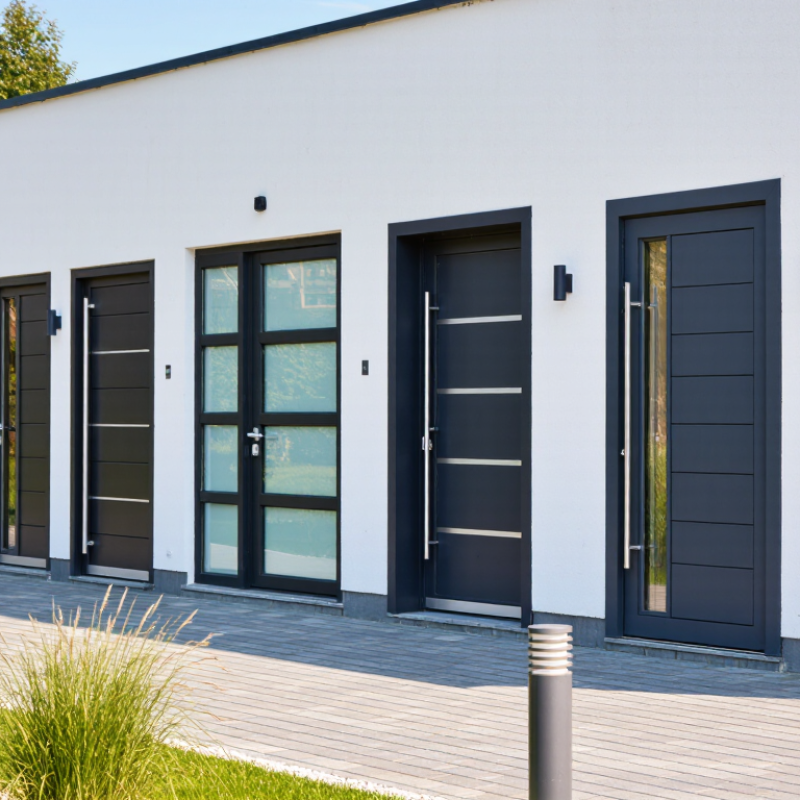
Modern aluminum entry doors can be quiet and minimal or sculptural enough to anchor a facade. A flush, matte-black slab creates a clean plane; a slim vertical-glass design brings daylight beside the handle. Oversized pivot doors make a bold entrance, while geometric cutouts add shadow without relying on ornament. Horizontal slats offer rhythm and partial screening. Perforated panels create a softer play of light. Subtle, but effective.

Other strong options include double-height doors for tall foyers, two-tone frames with warm wood-look panels, full-height sidelights, and a narrow transom above the door. For glazed designs, proportion matters: too much clear glass can expose the hallway at night. U.S. Department of Energy guidance estimates that windows account for 25–30% of residential heating and cooling energy use. That figure concerns windows, not entry doors, but it makes glazing and frame choices worth careful review.

Look for thermally broken aluminum frames, quality weather seals, and documented performance ratings. The National Fenestration Rating Council label lets buyers compare factors such as U-factor and solar heat gain coefficient across rated products. A sleek profile alone does not guarantee comfort. I’d check how the threshold meets the floor, too; small gaps can undo the polish of a beautiful design.

How Glass, Panels, Colors, and Finishes Define Each Style

Modern aluminum entry doors can look striking through careful choices in glass, panel layout, color, and finish.
A full-height glass design brings daylight into a dim foyer, while frosted or reeded glass softens views from outside. Narrow vertical glass panels create a taller appearance. Pivot doors make a bold statement, though their weight and clearance need careful planning.
Keep it practical.

Flat, flush panels suit minimalist homes and pair well with charcoal or warm white. A grid-style door adds structure, especially when slim aluminum bars divide clear glass. Horizontal panel lines feel calmer and wider. Double doors create a balanced entrance, but they need enough space to open comfortably.
Small details matter.

Color and surface texture can change the same door’s character. Deep bronze or black feels crisp; muted green adds a quieter, less expected note. Wood-look finishes offer warmth without disguising the door’s aluminum construction. Matte surfaces hide fingerprints better than glossy ones, though they may still show dust in strong light. Textured finishes catch changing daylight, while smooth anodized surfaces keep the look restrained.
A design can be beautiful in a sample and feel different at full scale, so check colors and glass in the actual entry light.

Comparing Security, Energy Efficiency, and Maintenance

Modern aluminum entry doors range from slim-sightline glass panels and pivot doors to ribbed, perforated, arched, double, flush, framed-glass, wood-look, and geometric designs. Their appeal is clear. But appearance alone cannot determine performance. A large glazed panel feels bright and open, yet its security and comfort depend on the glass, frame, and installation.

For security, check the lock points, reinforced frame, hinge design, and glazing specification—not just the door’s weight. Energy efficiency depends on thermal breaks, tight weatherstripping, and suitable insulated glass. A sleek frame can still feel cold if these details are weak. Maintenance is usually simple: rinse away grit and inspect seals and hardware. Coastal air or heavy rain may call for more frequent checks. Finishes vary, too, so follow the maker’s care instructions. These comparisons are practical, not a universal ranking; climate and installation can change the result.

Tips: Ask for performance details for the complete door assembly, not only the aluminum frame. Open and close a sample if possible. Check the threshold for drafts and water paths. I once focused too much on the finish; the seal deserved equal attention.

What Are the Top 10 Modern Aluminum Entry Door Designs? - Comparing Security, Energy Efficiency, and Maintenance

Design Typical Construction Security Potential Energy Efficiency Potential Maintenance Best Suited For
1. Minimalist Flush Panel Plain aluminum-faced leaf with a concealed or low-profile frame and insulated core. High when paired with a reinforced frame, secure hinges, and a multipoint lock. High potential with a thermal-break frame, insulated core, and well-sealed threshold. Low; clean the finish and check seals and hardware periodically. Contemporary homes seeking a simple, uncluttered entrance.
2. Wide-Slat Aluminum Horizontal aluminum slats or a slatted-look exterior over a solid, insulated door leaf. High potential if the slats are securely fixed and the underlying leaf and locking system are robust. Moderate to high; performance depends on the insulated core, frame, and air seals—not the slat pattern. Low to moderate; dust can collect between decorative slats. Modern façades where texture and clean horizontal lines are desired.
3. Vertical-Fin or Ribbed Panel A solid insulated door with narrow vertical fins, ribs, or applied aluminum detailing. High potential with concealed fixings, a reinforced frame, and quality locking hardware. Moderate to high when thermal breaks and continuous perimeter seals are specified. Moderate; textured surfaces may need extra attention during cleaning. Entrances that need visual depth without large glazed areas.
4. Narrow-Sidelight Door A solid aluminum door beside one slim fixed glazed panel. Moderate to high; use security glazing, protected glazing beads, and a secure frame-to-wall fixing. Moderate to high with insulated glazing, a thermally broken frame, and well-sealed joints. Moderate; glass needs cleaning and perimeter seals should be inspected. Narrow entrances that benefit from extra daylight and a more open appearance.
5. Full-Height Glazed Panel A glazed aluminum door, commonly specified with insulated glass and optional privacy treatment. Moderate; laminated security glass and secure glazing retention can improve resistance, but the glass remains a key consideration. Moderate to high with suitable insulated, low-emissivity glazing and a thermally broken frame. Moderate; glass, seals, and hardware require routine care. Bright entrances where daylight and a connection to the outdoors are priorities.
6. Frosted or Privacy-Glazed Door A glazed door using translucent, textured, or obscured glass to reduce direct views. Moderate; privacy glass does not itself increase break-in resistance. Laminated glazing and secure locks are separate upgrades. Moderate to high with insulated glazing, thermal breaks, and effective weather seals. Moderate; textured glass may require more careful cleaning. Street-facing entries where daylight is wanted without a clear view indoors.
7. Pivot-Style Door A large-format door supported by pivot hardware rather than conventional side hinges. Moderate to high when the pivot, frame, locking points, and anchoring are engineered for the door’s size and weight. Moderate to high; large doors need careful sealing and a thermally broken, well-fitted frame. Moderate; pivot alignment and hardware may need periodic adjustment. Large entryways designed to make a bold architectural statement.
8. Double-Leaf Entry Door Two coordinated door leaves, typically with one active leaf and one secured secondary leaf. High potential when both leaves lock securely and the meeting stile, flush bolts, and frame are properly reinforced. Moderate to high; the central meeting joint and threshold need especially good seals. Moderate; more hardware and seals require regular inspection. Wide entrances and households that occasionally move large items through the doorway.
9. Recessed-Reveal Door A flush or nearly flush door set back within a deep architectural frame or wall opening. High potential with concealed but secure hinges, a suitable multipoint lock, and a strong frame connection. High potential when the frame is thermally broken and the installation maintains continuous air and water seals. Low to moderate; inspect the recessed edges and weather seals for debris or wear. Minimalist architecture with deep reveals or a sheltered entry recess.
10. Integrated Smart-Lock Door A solid or glazed aluminum door configured for an electronic or connected lock and compatible access hardware. High potential with a secure mechanical lock, reinforced installation, and properly managed digital access; smart features alone do not make a door secure. Depends on the door build; a thermal-break frame, insulated core or glazing, and effective seals support better performance. Moderate; maintain the door as usual and monitor batteries, software, and access settings. Homes seeking keyless entry, temporary access codes, or connected access control.

Note: Security and energy-efficiency ratings describe potential, not guaranteed performance. Actual results depend on the complete door assembly, glazing, locks, installation, climate, and applicable local standards. A thermally broken frame helps reduce heat transfer through aluminum; a well-insulated door leaf and properly fitted weather seals also matter.

How to Choose the Right Aluminum Entry Door for Your Home

How to Choose the Right Aluminum Entry Door for Your Home

Start with your home’s exposure, not just the door’s appearance. A south-facing entrance may need glass with suitable solar control, while a windy porch benefits from well-fitted weather seals. Aluminum is strong and low-maintenance, but it conducts heat. Look for a thermally broken frame, especially in climates with cold winters or hot summers. Small details matter. Check the threshold, frame depth, and opening measurements before comparing finishes.

Match the design to your home’s proportions and daily routines. A narrow entry can feel brighter with a tall glazed panel, while a wide façade may suit double doors. Consider privacy, too: clear glass looks open, but frosted or textured glazing can soften views from the street. Choose a locking system and hinges suited to the door’s size and weight. A common oversight is ignoring installation quality; even a well-made door can draft if the frame is not square. I would not choose a finish from a tiny sample alone. Check it in daylight beside your exterior materials.

Tips: Ask for the frame’s thermal-break details and glazing specifications. Confirm that the installer will seal the perimeter and adjust the door after fitting. If possible, operate a full-size display model; a smooth handle can feel different once the door is installed.

FAQS

What makes aluminum suitable for an entry door?

It offers structural strength and supports slim, modern frames. It is durable, but not magic.

How do thermal breaks help?

They separate the frame’s inner and outer sections, limiting heat transfer. Seals and insulated cores matter too.

Which finish should I choose?

Matte charcoal can contrast with pale stone, while warm bronze can soften a glass-heavy façade. Check samples in daylight.

Can a glazed door affect comfort?

Yes. Look for tested U-factor data and well-sealed glazing. Appearance alone tells you little.

What design options bring in daylight?

Slim vertical glass, full-height sidelights, or a narrow transom can brighten an entry. Too much clear glass may reduce privacy at night.

What details deserve a close inspection?

Check the threshold, corners, and weather seals. Small gaps matter.

Is aluminum always a sustainable choice?

It can be recycled and often lasts a long time. Recyclable does not mean recycled, so ask about recycled content.

Do dark finishes change performance?

Dark colors can absorb more heat. I would still choose one for its look, but I’d check the frame design carefully.

Conclusion

A Modern Aluminum Entry Door combines clean lines, durable construction, and design flexibility to create a welcoming focal point for a home. This overview explores ten contemporary styles, from minimalist flush panels to designs featuring geometric details, glass inserts, or mixed materials. It explains how glazing, panel layouts, colors, and surface finishes shape each door’s appearance and influence the balance between privacy and natural light.

Beyond style, the article compares practical considerations such as security, energy efficiency, and maintenance. It also offers guidance on choosing a door that suits a home’s architecture, climate, privacy needs, and everyday use. By weighing appearance alongside performance and upkeep, homeowners can identify an aluminum entry door that feels distinctive while meeting the demands of daily life.

Ethan

Ethan

Ethan is a seasoned marketing professional with a deep expertise in our company's innovative product line. With a passion for sharing knowledge and insights, he takes the lead in regularly updating our corporate blog, where he explores industry trends, product features, and effective marketing......