Choosing an Aluminum Entrance Door is not merely a design decision. It affects security, thermal comfort, maintenance, and the building’s first impression. A slim frame may look impressive in a showroom, yet poor installation can create air leakage, water entry, or difficult operation. Small details matter.
Fenestration expert Gary H. Johnson once observed, “A door is only as reliable as the system around it.” This principle applies directly to aluminum entrance doors. The frame, hinges, threshold, glazing, seals, hardware, and surrounding wall must work together. A supplier should therefore provide more than attractive catalog images. Buyers need tested performance data, clear warranty terms, installation guidance, replacement-part availability, and responsive technical support.
This guide examines the Top 10 Aluminum Entrance Door Suppliers Worldwide through practical criteria. These include product quality, design flexibility, energy performance, customization, certifications, project experience, and after-sales service. Regional climate also matters. A door designed for a dry coastal city may perform differently in a cold, windy region. That point is easy to overlook.
No ranking can fit every project perfectly. Budget, building type, local installers, and lead times can change the final choice. Some suppliers offer excellent engineering but limited customization. Others provide beautiful finishes but weaker support. That is the uncomfortable part. Buyers must inspect the full system, not just the door panel. The best supplier is not always the largest name. It is the one that delivers dependable performance when the entrance faces real weather, daily traffic, and years of use.
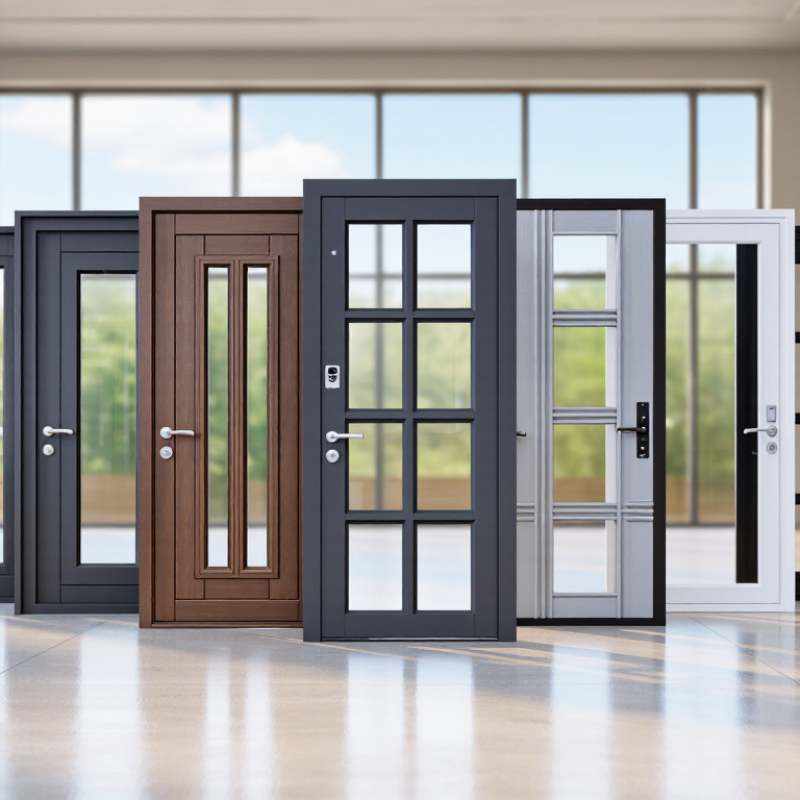
Top 10 Aluminum Entrance Door Suppliers Worldwide?
Definition and Role of Aluminum Entrance Door Suppliers
Aluminum entrance door suppliers source, configure, and deliver complete door systems for homes, offices, hotels, and public buildings. Their role extends beyond selling frames. They help buyers select profiles, glass, hinges, locks, thresholds, finishes, and installation methods.
An experienced supplier should understand thermal breaks, water drainage, air resistance, and structural load. They should also provide accurate drawings, section details, product samples, and tested performance data. Reliable documentation helps architects compare products without guessing. Suppliers may coordinate fabrication, packaging, delivery, and technical support. Some also advise installers when alignment problems appear on site.
Tips: Ask for profile dimensions, glass specifications, warranty terms, and regional compliance documents. Request a physical corner sample if the project has strict finish requirements. Check how the supplier handles damaged parts and replacement hardware.
A dependable supplier communicates realistic lead times and explains what affects cost. Custom colors, oversized panels, concealed closers, and special glazing often require additional production time. Site conditions matter too. Uneven openings can create gaps, even when the door itself is well made.
Not every attractive sample represents long-term performance. I have seen projects focus on appearance while overlooking drainage and maintenance access. That mistake can become expensive. Buyers should review installation instructions, cleaning needs, and service availability before placing a large order. Supplier quality is measured before delivery, during installation, and months after daily use begins.
| Rank | Anonymized Supplier Profile | Primary Supply Region | Main Product Role | Common Aluminum Alloy | Thermal Performance | Relevant Standards | Typical Lead Time | Typical Export Capability | Best-Fit Buyers |
|---|---|---|---|---|---|---|---|---|---|
| 1 | Profile A – Integrated Architectural Door Manufacturer | Western Europe | High-performance residential and commercial entrance systems | 6063-T5/T6 extruded aluminum | Thermally broken frames; project-dependent U-values | EN 14351-1; CE-related documentation; EN 12207 air leakage | 6–12 weeks | Strong palletized and containerized export service | Developers, architects, and specialist contractors |
| 2 | Profile B – High-Volume Extrusion and Fabrication Supplier | East Asia | Standardized entrance doors and private-label production | 6063-T5/T6 aluminum profiles | Non-thermal-break and thermal-break options | ASTM E283; ASTM E330; EN 12207 where specified | 5–10 weeks | High-volume OEM and container-load fulfillment | Importers, distributors, and housing manufacturers |
| 3 | Profile C – Custom Commercial Door Specialist | North America | Oversized, glazed, and heavy-duty entrance assemblies | 6063-T5/T6; project-specific reinforced sections | Thermally improved frames with insulated glazing compatibility | AAMA/WDMA/CSA testing practices; ASTM E330 | 8–16 weeks | North American project logistics and technical submittals | Commercial contractors, institutions, and offices |
| 4 | Profile D – Energy-Efficient Residential Door Supplier | Central Europe | Low-energy and passive-house-oriented entrance doors | 6063-series thermally broken profiles | Multi-chamber thermal barriers; insulated panels and glazing | EN 14351-1; EN 10077 thermal transmittance calculations | 6–12 weeks | Regional distribution with documented product testing | Energy-conscious homeowners and renovation firms |
| 5 | Profile E – Gulf and Hot-Climate Entrance Specialist | Middle East | Solar-resistant doors for villas, hotels, and public buildings | 6063-T5/T6 with powder-coated finishes | Thermal breaks, solar-control glazing, and weather seals | ASTM E283; ASTM E331; regional fire and weather requirements | 6–14 weeks | Project-based export to hot and humid climates | Villa builders, hospitality projects, and property developers |
| 6 | Profile F – Large-Format and Minimalist Door Supplier | Southern Europe | Slim-frame pivot, hinged, and concealed-frame entrances | High-strength 6063-series extrusions | Thermally broken systems designed for large glazed areas | EN 14351-1; EN 12207; EN 12208 water tightness | 8–18 weeks | Specialized crating for oversized architectural products | Luxury residential and high-end architectural projects |
| 7 | Profile G – Fire-Rated and Security Door Fabricator | Northern Europe | Security-focused, fire-resistant, and controlled-access entrances | Aluminum profiles with steel or mineral-core components | Thermal breaks available; performance depends on tested assembly | EN 16034; EN 1634-1; EN 1627 security classification | 10–20 weeks | Technical project delivery with compliance documentation | Public buildings, infrastructure, and security projects |
| 8 | Profile H – Sustainable and Recycled-Aluminum Supplier | Oceania and Asia-Pacific | Low-carbon, recyclable, and environmentally documented door systems | Primary and recycled 6063-series aluminum | Thermally broken frames with environmental product documentation | ISO 14001 practices; EPD availability varies by product | 8–16 weeks | Regional export with sustainability documentation | Green-building projects and environmentally focused developers |
| 9 | Profile I – Mid-Market Door and Window Distributor | Latin America | Standard residential and light-commercial replacement doors | 6063-T5 aluminum profiles | Primarily standard-frame systems; thermal options by order | Local building codes; ASTM or EN testing where specified | 4–10 weeks | Mixed-container and distributor-oriented shipments | Retailers, contractors, and residential renovators |
| 10 | Profile J – Small-Batch Custom Fabricator | Africa and emerging markets | Made-to-measure doors for residential and small commercial work | Locally sourced 6063-series extrusions | Basic weather sealing; upgraded thermal systems available selectively | Local code compliance; third-party testing varies by project | 3–8 weeks | Regional delivery with limited long-distance export | Custom-home builders and local construction firms |
Note: Supplier names are intentionally omitted. Lead times, thermal performance, certifications, and export capability vary by design, glazing, finish, order volume, testing scope, and destination-market requirements. The aluminum alloy designation 6063-T5/T6 is commonly used for architectural extrusions, while final product performance must be confirmed through project-specific technical documentation.
Compare thermal transmittance, air leakage, water resistance, and wind-load results. Independent laboratory reports deserve more weight than attractive catalogs. Test conditions must be visible.
Recycled aluminum uses far less energy than primary aluminum production. Ask for recycled-content records, alloy traceability, and environmental declarations. Claims without documents remain uncertain.
Review coating thickness, salt-spray testing, hardware cycle tests, and coastal performance. Check whether seals stay flexible after repeated use. Small details matter.
No. It can indicate controlled production, but it does not prove outstanding door performance. Also examine site references, inspection records, warranty response, and spare-parts availability. Certification is only one clue.
Request a full-size corner sample when possible. Inspect frame depth, threshold height, drainage paths, corner joints, hinges, and seals. Check glass and lock compatibility. Do not judge weight alone.
Review production lead times, export experience, packaging quality, and documented damage rates. Ask how transport damage is repaired. A strong door is not enough.
Look for recycled content, renewable electricity use, and transparent carbon reporting. Environmental statements should include evidence and clear boundaries. Some data may remain incomplete.
Some suppliers publish thermal figures without frame size, test conditions, or installation details. That makes comparison unreliable. No ranking is flawless. I would record uncertainty instead of pretending every score is precise.
This article explores the role of Aluminum Entrance Door suppliers in the global construction and architectural markets. These suppliers do more than provide door products; they support project planning, material selection, customization, manufacturing, quality control, and after-sales service. The article also explains the key criteria for evaluating international manufacturers, including product durability, thermal performance, design flexibility, production capacity, certifications, delivery reliability, sustainability practices, and customer support.
A regional overview highlights how supplier strengths may differ across major markets, while profiles of ten leading supplier types illustrate the range of capabilities available worldwide without focusing on specific brand names. The final section offers a practical comparison framework to help buyers assess technical specifications, pricing, lead times, customization options, warranty terms, and communication efficiency. By using these criteria, architects, contractors, developers, and distributors can identify a dependable partner that meets project requirements and delivers high-quality Aluminum Entrance Door solutions for residential, commercial, and institutional applications.

 ArmorSafe Doors