Choosing the right Aluminum Front Door is not only about a sleek appearance. It is a decision involving security, weather resistance, thermal performance, and daily comfort. A beautiful door can still feel cold, rattle in strong wind, or allow water around the threshold. Small details matter.
Building-science expert Joseph Lstiburek often says, “Buildings are systems.” That idea applies directly to an Aluminum Front Door. The frame, glass, hinges, seals, threshold, wall opening, and installation must work together. If one part fails, the entire entrance may underperform. This guide explores seven practical tips for evaluating those parts before you buy. It also considers finish quality, energy efficiency, hardware strength, drainage, maintenance, and warranty support.
Look closely.
Picture a rainy morning. Water runs down the panel, children open the door repeatedly, and muddy shoes cross the threshold. Will the surface remain easy to clean? Will the lock operate smoothly? Will the seals stay tight after years of temperature changes? These questions are more useful than relying on showroom shine alone.
There is no perfect door for every property. I have seen homeowners prioritize a dramatic glass design, then regret weak privacy or poor solar control. Others choose the lowest price and later pay for adjustments, repainting, or replacement hardware. That is why careful comparison matters. The best Aluminum Front Door should suit your climate, architecture, security needs, and installation conditions—not merely your first impression.
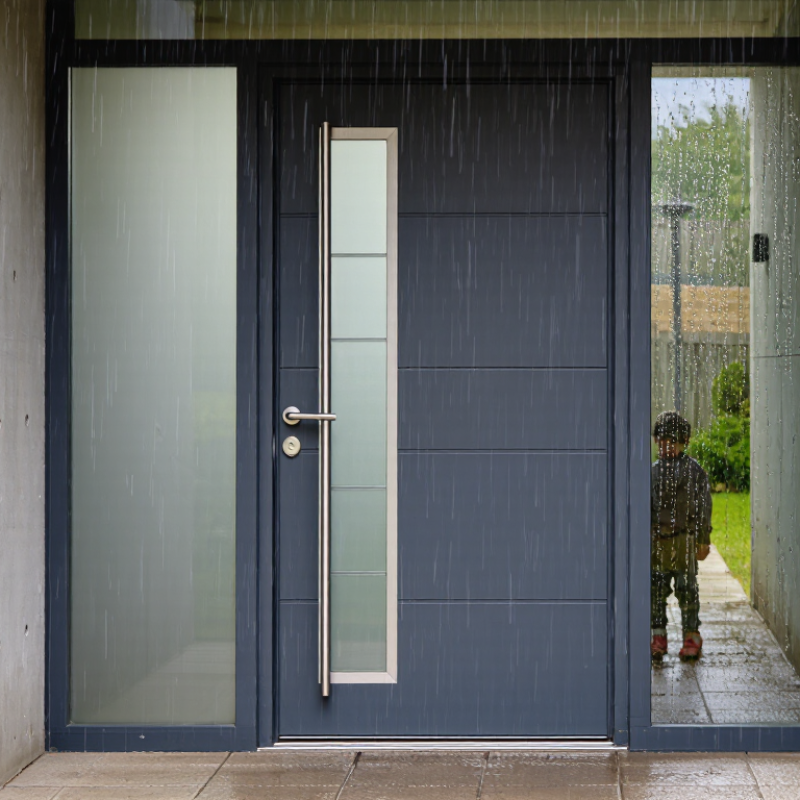
Choosing an aluminum front door should begin with your climate goals, not just its color or hardware. The NFRC label provides tested performance data for comparing door systems. Pay close attention to the U-factor. A lower U-factor means less heat moves through the door, which can support warmer interiors during winter and reduce heating demand.
SHGC matters differently. A lower SHGC limits solar heat entering through glazed sections, useful for hot, sunny locations. In colder regions, a moderate or higher SHGC may provide helpful winter warmth through direct sunlight. Consider the entrance direction, nearby walls, roof overhangs, and local weather. A south-facing door with afternoon glare may need different glass than a shaded north-facing entrance.
Check the complete assembly, not only the glass. The frame, panel, glass edge, seals, and threshold all affect performance. Look for a certified NFRC rating for the full unit. Ask how the door was tested and whether installation details match your wall construction. Poor perimeter sealing can undermine a good U-factor.
Small details matter. Feel for drafts on a windy day. Inspect the sweep and weatherstripping each season. Aluminum can conduct heat, so thermal breaks deserve attention. They are easy to overlook. I would also question attractive claims without measured values. A beautiful door may still create a cold interior surface, condensation, or unwanted summer heat. Real performance depends on both the rating and careful installation.
7 Tips for Choosing the Best Aluminum Front Door
A strong aluminum door begins with a thermally broken frame. Thermal breaks use low-conductivity materials to separate interior and exterior aluminum paths. This limits heat transfer and reduces interior surface condensation. The U.S. Department of Energy reports that windows and doors can account for 25%–30% of residential heating and cooling energy use. Therefore, frame design deserves equal attention to glass selection.
Tip 1: Request complete AAMA 1503.1 test results. This method measures U-factor and condensation resistance for the full fenestration product. Do not accept glass-only data. Ask for the tested frame, panel, glazing, hardware, and dimensions. A lower U-factor generally indicates better insulation. However, a low number alone does not guarantee comfort. Installation gaps can undermine excellent laboratory performance.
Tip 2: Check the condensation resistance factor, or CRF. Higher CRF values suggest better resistance to interior condensation under standardized conditions. Confirm the report identifies the exact door configuration. Tip 3: Inspect the thermal break visually. It should form a continuous barrier around the frame, not appear as isolated plastic pieces. Field experience shows that corner joints and thresholds often deserve extra scrutiny. The 2023 International Energy Conservation Code also emphasizes improved fenestration efficiency, but local requirements vary. A certified laboratory report is more reliable than a sales brochure, and questioning incomplete data is worthwhile.
When choosing an aluminum front door, ask for an AAMA 2605 finish rather than accepting vague claims like “weather resistant.” This specification indicates a high-performance coating system designed for demanding exterior use. In coastal areas, request documented resistance to 4,000 hours of salt-spray testing. That figure matters because salt can attack exposed edges, fasteners, and poorly prepared surfaces.
Do not rely on a sales sheet alone. Ask for an independent laboratory report showing the tested aluminum substrate, pretreatment, coating thickness, and failure criteria. The report should identify whether blistering, corrosion, or coating loss appeared after testing. Small details count. A sharp frame corner or an unsealed cut can become a weak point, even when the main panel looks flawless.
Salt spray is useful, but it is not a perfect forecast of real life. Outdoor doors also face sunlight, rain, temperature changes, and cleaning chemicals. I would inspect the door’s corners, drainage paths, hinges, and threshold before deciding. A finish may pass a laboratory test yet perform poorly if installation damages the coating. This is where buyers sometimes overlook the practical side. Request maintenance instructions and written finish coverage, then compare them with your local climate. The strongest choice combines verified AAMA 2605 compliance, 4,000-hour salt-spray evidence, careful fabrication, and professional installation.
Choosing the best aluminum front door requires more than a thick frame or attractive finish. Use seven practical checks.
Ask for an ASTM E283 test report showing air leakage at a stated pressure difference. Compare results only when pressure and units match. Inspect weatherstripping, threshold seals, corner joints, and the frame connection. A small gap near the lower corner can create a noticeable whistle on windy evenings. The U.S. Department of Energy reports that air leakage can represent 25% to 40% of a home’s heating and cooling energy use. That figure is broad, but it makes sealing worth measuring.
For security, request lock hardware tested under ANSI/BHMA A156.2. This standard evaluates bored and preassembled locksets, including operational strength and security performance. Grade 1 is generally the highest category, but the test edition and complete report still matter. Check cycle results, latch strength, strike reinforcement, and compatibility with the door thickness. A156.2 does not certify the entire aluminum door assembly. That distinction is easy to miss. Confirm that the strike area uses solid reinforcement and properly anchored screws. Installation matters too. Even excellent hardware performs poorly when the frame shifts or the latch barely enters the strike. I would not trust one impressive number; request the full report and inspect the installed sample.
7 Tips for Choosing the Best Aluminum Front Door
Tip 1: Confirm the installation plan before ordering. Measure the rough opening, wall depth, sill condition, and swing direction. An experienced installer should explain flashing, drainage, shims, and fastener spacing. Ask for photos of similar projects or documented training. Small errors here can cause drafts, leaks, or difficult operation. I once underestimated sill height, and the door needed adjustment later.
Tip 2: Check code fit and NFRC labeling. Requirements vary by location, climate, wind exposure, and emergency egress rules. Request written confirmation that the door assembly meets local building requirements. The NFRC label should show tested thermal performance, including U-factor and air leakage. Review the exact configuration, not a similar model. Glass type, frame size, and hardware can change the rating. A promising number is not enough.
Tip 3: Read the warranty like a contractor. Confirm coverage for the frame, finish, glass, hardware, seals, labor, and installation damage. Ask who handles service if the installer and manufacturer disagree. Look for exclusions involving coastal air, improper cleaning, condensation, or unapproved modifications. Keep the invoice, product label, and installation records together. Warranty language can be surprisingly narrow. I would also ask about response times, because written coverage means little during a winter draft.
| Tip | What to Check | Useful Evidence or Specification | Why It Matters |
|---|---|---|---|
| 1. Confirm the installation requirements | Verify rough-opening dimensions, sill conditions, flashing, drainage, anchoring, threshold height, and whether the wall is plumb, level, and square. | Written installation instructions, a site-measurement report, approved shims and fasteners, and a clear responsibility for waterproofing work. | Correct preparation helps reduce air leakage, water intrusion, sticking, and premature hardware or seal failure. |
| 2. Check local code fit | Ask the local building department or authority having jurisdiction about required egress, safety glazing, accessibility, wind resistance, fire separation, and energy provisions. | Applicable product approvals, structural ratings, safety-glazing documentation, and permit requirements for the project location. | Code requirements vary by location and opening type; a door that fits physically may still require changes or approval. |
| 3. Look for NFRC labeling when applicable | Determine whether the complete door assembly, including glazing, has an NFRC label or certified rating rather than relying only on center-of-glass data. | A permanent or temporary NFRC label showing whole-product values such as U-factor, solar heat gain coefficient, visible transmittance, and air leakage where reported. | Whole-unit ratings provide a more useful comparison of the door, frame, glazing, and edge components together. |
| 4. Evaluate thermal performance | Review thermal breaks in the aluminum frame, insulated glass options, weatherstripping, threshold design, and the door's tested U-factor. | Product data for the exact size and configuration, with lower U-factor values generally indicating better resistance to heat flow. | Thermal design influences interior comfort, condensation risk, heating and cooling loads, and long-term operating costs. |
| 5. Assess security and daily operation | Inspect the lock type, strike reinforcement, hinge design, multipoint hardware if used, frame attachment, door alignment, and accessibility of the handle. | Documented hardware specifications, tested operating cycles where available, adjustable hinges, and a serviceable replacement-parts policy. | A secure door should also open, close, lock, and remain aligned reliably under normal daily use. |
| 6. Compare finish and maintenance needs | Confirm the finish type, cleaning instructions, exposure limitations, drainage paths, seal replacement procedure, and compatibility with coastal or high-moisture conditions. | Care instructions, finish-performance information, recommended cleaners, and details about corrosion prevention for the chosen environment. | Routine care helps preserve appearance, reduce corrosion risk, and maintain weather seals and moving hardware. |
| 7. Read the warranty coverage carefully | Separate coverage for the frame, finish, glass, hardware, weatherstripping, labor, and installation. Check exclusions, transferability, claim deadlines, and maintenance obligations. | The current written warranty, proof-of-purchase requirements, service process, and confirmation of whether labor or removal and reinstallation costs are covered. | A product warranty may not cover improper installation, normal wear, misuse, unauthorized modifications, or damage caused by environmental exposure. |
Note: Confirm the applicable requirements with the local building authority and use the documentation for the exact door size, glazing package, hardware, and installation method.
It separates indoor and outdoor aluminum paths with insulating material. This reduces heat transfer and interior condensation. The barrier should be continuous.
Request results for the entire door assembly, not glass alone. The report should identify the frame, panel, glazing, hardware, and dimensions. A lower U-factor usually means better insulation. Laboratory numbers can disappoint after poor installation.
Check the condensation resistance rating under standardized conditions. Higher values generally indicate better performance. Confirm the report matches your exact door configuration. Similar models are not enough.
Look for a continuous insulating barrier around the frame. Do not accept scattered plastic sections as proof. Inspect corners and the threshold carefully. Those areas often hide weaknesses.
Measure the rough opening, wall depth, sill condition, and swing direction. Ask how the installer will handle flashing, drainage, shims, and fasteners. Request project photos or training records. Small errors can create drafts, leaks, or stiff operation.
Requirements vary with location, climate, wind exposure, and emergency exit rules. Request written confirmation for the complete door assembly. Check thermal performance and air leakage labels. Local rules can be surprisingly different.
Glass type, frame size, hardware, and installation conditions can change the results. Review the exact tested configuration. A promising number proves little by itself. I might overlook this when comparing attractive brochures.
Confirm coverage for the frame, finish, glass, hardware, seals, labor, and installation damage. Ask who handles disputes between the installer and supplier. Review exclusions for coastal air, cleaning, condensation, and modifications. Keep invoices and installation records together. Response time matters during a winter draft.
Choosing the best Aluminum Front Door requires more than comparing appearance and price. Begin by defining your climate goals and reviewing the NFRC U-Factor and SHGC ratings to understand insulation and solar heat performance. Ask whether the door includes effective thermal breaks, and request verified AAMA 1503.1 test results to confirm resistance to heat transfer and condensation. For long-term durability, select a finish tested to AAMA 2605 standards, with documented resistance to corrosion, weathering, and at least 4,000 hours of salt-spray exposure.
Performance and installation quality are equally important. Check air leakage results under ASTM E283 and review security hardware performance according to ANSI/BHMA A156.2. Before purchasing, confirm that the door fits local building codes, comes with accurate NFRC labeling, and includes clear warranty coverage for the finish, structure, hardware, and installation. A careful evaluation of these factors will help ensure lasting comfort, security, energy efficiency, and value.

ArmorSafe Doors