Why Choose a Premium Aluminum Entry Door?

Time:2026-11-17 Author:Charlotte
0%

A front door does more than mark an entrance. It faces rain, fingerprints, changing temperatures, and daily use, while shaping a home’s first impression. A Premium Aluminum Entry Door can offer a slim, contemporary frame and a durable surface, but its real performance depends on more than appearance. Frame design, thermal breaks, glazing, weather seals, and installation all deserve attention.

Designer Charles Eames observed, “The details are not the details. They make the design.” Though he was not speaking specifically about aluminum doors, the idea applies clearly here. A smooth handle, crisp frame joints, and carefully fitted threshold can make an entry feel considered. Poor sealing can undermine that impression quickly. Small details matter.

This guide explores why homeowners consider premium aluminum entry doors, from design flexibility to strength and upkeep. It also looks at practical questions: how the door may perform in your climate, what its finish requires, and which specifications deserve comparison. A higher price does not guarantee a better fit. Ask for documented thermal and water-performance information, and review the installation plan before choosing. One limitation is easy to overlook: aluminum conducts heat, so insulation details matter. The best choice balances appearance with measured performance, everyday comfort, and the realities of your home.
Why Choose a Premium Aluminum Entry Door?

Premium Aluminum Entry Doors: Frame Alloys, Thermal Breaks, and Construction

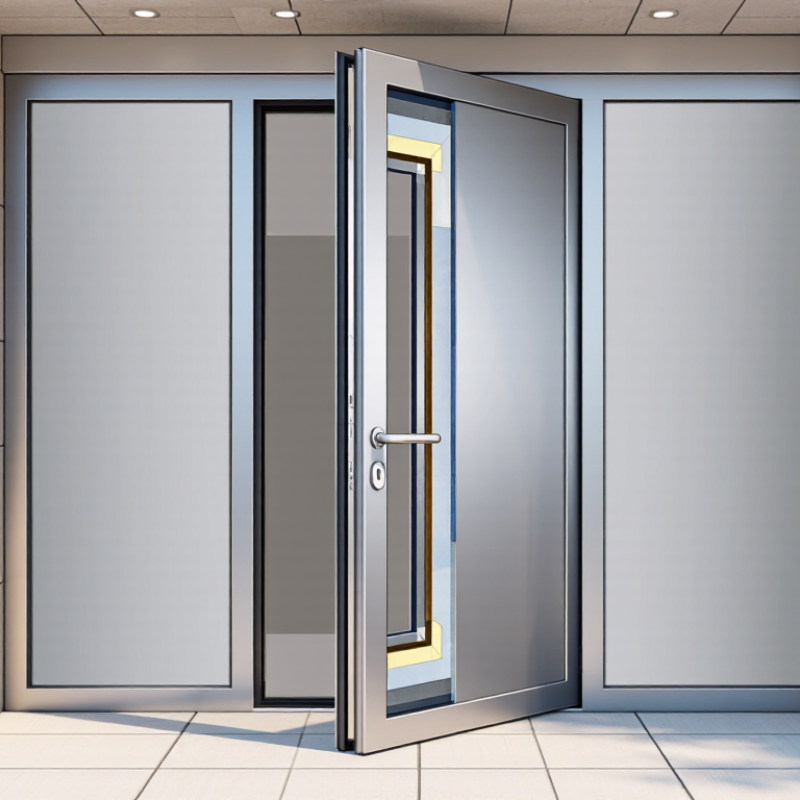
A premium aluminum entry door starts with the frame alloy. Strong, well-finished profiles resist warping and support large glass panels, but alloy choice alone cannot guarantee performance. Look for documented product testing and clear specifications. Details matter.

Thermal breaks separate the interior and exterior aluminum sections with a lower-conductivity barrier, limiting heat flow through the frame. The U.S. Department of Energy’s Energy Saver guidance estimates that windows account for 25–30% of residential heating and cooling energy use; that figure is not specific to doors, but it shows why glazed openings deserve attention. NFRC ratings let buyers compare tested U-factor values. Check the complete door assembly, not only its glass. Not just glass.

Construction details affect daily comfort. Continuous thermal breaks, insulated cores, sealed corners, and weatherstripping help reduce drafts and cold interior surfaces. Ask whether the stated rating covers the same configuration you plan to buy, including sidelights and glazing. A lower U-factor is useful, yet installation can still undermine it. That part is easy to overlook. Even a carefully engineered frame needs a level opening, secure anchoring, and an unbroken perimeter seal.

How NFRC U-Factor Ratings Measure Whole-Door Thermal Performance

Why Choose a Premium Aluminum Entry Door?
How NFRC U-Factor Ratings Measure Whole-Door Thermal Performance

A door’s U-factor measures how quickly heat passes through it. Lower numbers generally indicate better insulation. The NFRC rating reflects the complete door assembly, not just its insulated center panel. It accounts for the frame, glazing, and other tested components.

That matters on a cold morning. Heat can escape around a glass insert or through an uninsulated frame, even when the central panel performs well. Aluminum is strong and durable, but it conducts heat readily. A thermal break—a nonmetallic barrier within the frame—can reduce that transfer. Check the rated product details rather than assuming every aluminum door performs alike.

Look closely. Compare whole-door NFRC ratings for similarly configured units, including glass options. A number alone can still mislead: installation gaps and weatherstripping affect real-world comfort, but may not be captured by the rating. That is an easy detail to overlook. Ask how the tested configuration matches the door you plan to buy, and treat the rating as useful evidence, not a promise of identical results in every home.

Why Choose a Premium Aluminum Entry Door?

How NFRC U-Factor Ratings Measure Whole-Door Thermal Performance

A whole-door U-factor accounts for heat transfer through the complete door assembly, including its frame and any glazing. Lower U-factors indicate less heat transfer. The chart shows calculated heat flow for a 1 ft² area with a 30°F indoor-outdoor temperature difference, using Q = U × A × ΔT. U-factor values are illustrative, not product test results.

For an apples-to-apples comparison, look for the NFRC-certified whole-door rating—not a rating for the center panel alone—and compare doors with similar configurations.

What AAMA/WDMA/CSA Performance Grades Test for Air, Water, and Wind

AAMA/WDMA/CSA performance grades offer a practical way to compare how an aluminum entry door handles air, water, and wind-related pressure. Under the North American Fenestration Standard, tested products face controlled laboratory procedures. Air tests measure leakage through the closed assembly. Water tests expose it to water spray and pressure differences. Structural tests apply positive and negative pressure to assess deflection and resistance.

The grade matters. It helps show whether a door suits a sheltered porch or a more exposed entrance. Check the rating for the exact door size, glazing, frame, and hardware configuration; changing these details can affect results. A report may list an air-leakage value, a water-penetration resistance, and a structural design pressure. Read the figures, not just the grade label. Installation matters, too. A well-tested door can still admit drafts if the frame is out of square or the sill is poorly sealed. I would not treat a high rating as a guarantee for every building. Lab conditions are controlled, and real weather is not.

That caveat is easy to miss.

Why Aluminum Recycling Saves Up to 95% of the Energy Needed for Primary Production

A premium aluminum entry door is often chosen for its clean lines, stable frame, and resistance to everyday moisture. Yet the material also has an energy story. Aluminum can be recycled repeatedly without losing its essential properties, making recovered metal useful in new door components.

Producing recycled aluminum can use up to 95% less energy than making primary aluminum from bauxite ore. The exact saving depends on collection, sorting, transport, and processing. That matters. A discarded frame must be separated from glass, seals, and hardware before the metal can be reused. Recycling is not energy-free, and “up to” describes a best-case comparison, not every recycling stream.

For buyers, recycled content can reduce demand for energy-intensive primary metal, especially when sourcing information is available. Ask whether the door contains recycled aluminum and whether its parts can be separated at the end of its service life. It is tempting to treat a high recycled-content figure as the whole answer, but installation and durability also count. Even a sturdy door needs attention: worn seals and misaligned hinges can shorten its useful life.

How Lifecycle Cost, Maintenance, and Design Affect Long-Term Value

A premium aluminum entry door is a long-term purchase, not just a curb-appeal upgrade. Its value depends on the frame, thermal break, finish, hardware, and quality of installation. In a cold morning, a poorly sealed threshold can matter more than an elegant handle. Check weatherstripping and door alignment each year. Small adjustments help prevent drafts and unnecessary wear.

The 2024 Cost vs. Value report by Zonda found that a steel entry-door replacement recouped an estimated 188.1% of its project cost at resale. That figure is a market estimate, not a promise, and the study measured steel doors—not aluminum. It does, however, suggest that buyers notice a well-presented entrance. The comparison is imperfect. For aluminum, ask for documented U-factor and air-leakage ratings, and compare the full installed cost rather than the door price alone.

Maintenance is modest, not zero. Salt, grit, and standing water can mark finishes or stress hardware over time. Rinse the frame, clear the sill, and inspect seals for cracks. Design also affects longevity: a restrained finish may suit future exterior updates, while custom colors can be harder to match. Consider repairability, too. A replaceable lock or weather seal can extend service life without replacing the whole door.

FAQS

Why does the aluminum frame alloy matter?

A strong, well-finished alloy can resist warping and support large glass panels. Alloy choice alone does not prove performance. Ask for documented testing.

What does a thermal break do?

It separates interior and exterior aluminum with a less conductive barrier. This can reduce heat transfer through the frame. Details matter.

What does a door’s U-factor tell me?

It measures how quickly heat passes through the complete tested door assembly. Lower values generally mean better insulation. Not just glass.

Should I compare ratings for the glass or the entire door?

Compare whole-door ratings, including the frame and glazing. Check that the tested configuration matches your planned door, including any sidelights.

What construction details can help reduce drafts?

Continuous thermal breaks, insulated cores, sealed corners, and weatherstripping can help. Even small gaps around a door may affect comfort.

What do air, water, and structural performance tests show?

They assess leakage, water resistance, and resistance to pressure. Check results for the exact size, glazing, frame, and hardware you intend to buy.

Does a strong laboratory rating guarantee comfort at home?

No. Installation can weaken performance if the frame is out of square or the perimeter seal is incomplete. Weather is less predictable than a lab.

What should I check during installation?

Confirm the opening is level, the frame is securely anchored, and the perimeter seal is continuous. I might overlook the sill, too.

Conclusion

A Premium Aluminum Entry Door combines strong frame alloys with carefully engineered construction and thermal breaks that reduce heat transfer while supporting a clean, durable design. Its NFRC U-factor rating reflects the thermal performance of the complete door assembly, not just the glass or frame, helping homeowners compare how effectively different options limit heat loss and gain. AAMA/WDMA/CSA performance grades provide further insight by testing resistance to air leakage, water penetration, and wind pressure.

Aluminum also offers long-term value through its durability, low maintenance needs, and design flexibility. Recycling aluminum can save up to 95% of the energy required to produce primary aluminum, making recycled content an important consideration. When assessing overall cost, look beyond the purchase price: thermal performance, upkeep, service life, and a design that suits the home all contribute to the door’s value over time.

Charlotte

Charlotte

Charlotte is a seasoned marketing professional with a deep understanding of the company's portfolio and a passion for elevating its presence in the market. With a keen eye for detail and a commitment to excellence, she ensures that our professional blog is regularly updated with insightful articles......